
Hearing

At Auz Audiology, we offer latest-generation hearing solutions, with a wide range of digital models to find the option that best suits your needs, ensuring excellent value for money.

We invite you to understand how the sense of hearing works

Hearing is part of the way we relate to everything around us. That is why we can say that it directly affects our quality of life.

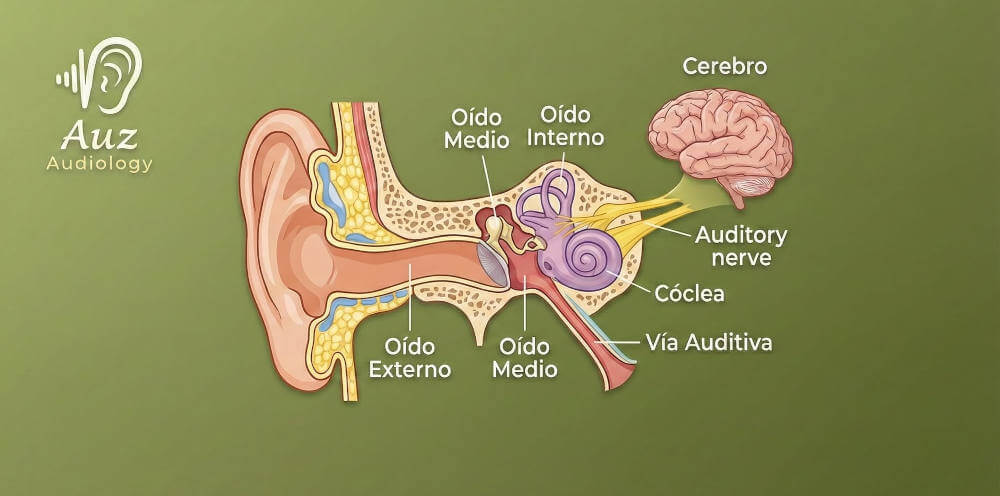
It all begins when the outer ear captures sound waves and carries them through the ear canal to the eardrum, which vibrates when it receives each acoustic stimulus.

These vibrations pass through the chain of small bones — the malleus, incus and stapes — and reach the cochlea, located in the inner ear. Inside it, sensory cells convert movement into electrical signals that the brain processes and interprets as sounds.

HEARING AND THE BRAIN ARE DIRECTLY CONNECTED

At Auz Audiology we personally analyse the possible factors that may affect this process, whether it is sensorineural, conductive or mixed hearing loss. We know that hearing loss can influence communication, concentration, balance and emotional well-being. That is why we carry out complete hearing assessments at our clinic in San Fulgencio, Alicante, with the aim of offering solutions adapted to each person.

At Auz Audiology, we carry out a detailed hearing assessment and guide you towards the most appropriate alternatives according to your specific case of hearing loss, offering clear and personalised advice in San Fulgencio, Alicante.

BOOK AN APPOINTMENT NOW TO ASSESS YOUR HEARING

IF YOU HEAR WELL, YOU LIVE WELL

Get to Know the Ear

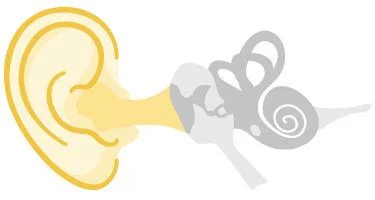
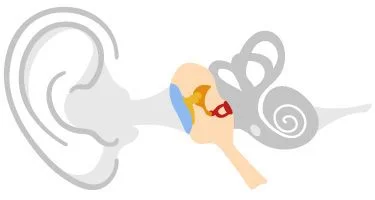
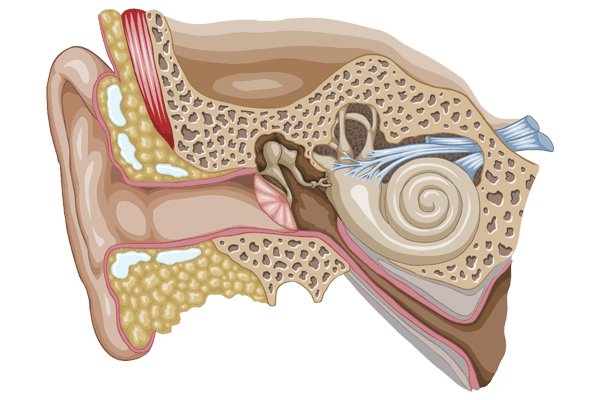
The ear performs an essential function: transforming sound waves into stimuli that can be interpreted by the nervous system. To do this, it is structured into three clearly differentiated areas.

These parts — the outer ear, middle ear and inner ear — work in a coordinated way. Each one plays a specific role in the process of capturing, transmitting and transforming sound until it is finally interpreted by the brain.

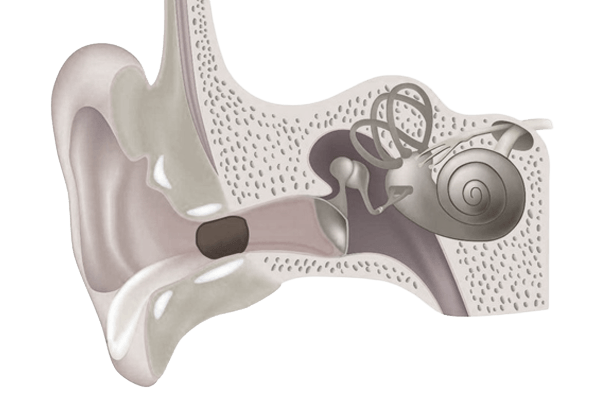
Outer Ear

Middle Ear

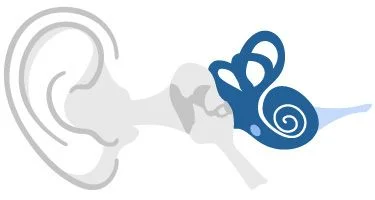
Inner Ear

HEARING PROCESS

Sound begins a fascinating journey inside our ear. Sound waves travel through the ear canal until they reach the eardrum, causing it to vibrate. These vibrations are transmitted to the fluid in the cochlea, where hair cells transform them into electrical impulses that the brain interprets as clear, understandable sounds. Thanks to this process, we can communicate, enjoy music and connect with our surroundings.

Hearing loss: a silent change

Hearing loss usually appears gradually and almost imperceptibly. Little by little, we may start hearing worse without realising it, unconsciously adapting to this gradual loss. That is why many people do not detect the problem until it begins to affect their daily life.

Having a Hearing Assessment at least once a year is the best way to care for our hearing health. However, there are signs that can alert us:

  • Difficulty understanding what other people say
  • Problems following group conversations
  • Frequently needing to ask people to repeat themselves
  • Using the television or radio at a high volume
  • Avoiding social gatherings or activities because of difficulty hearing

Beyond hearing less

Hearing loss does not only affect the ear; it also influences our communication, relationships and emotional well-being. When it is not treated in time, it often progresses and can lead to deafness.

In addition, several studies link untreated hearing loss with cognitive decline, as well as emotional problems such as stress, social isolation or depression, directly affecting quality of life.

Caring for your hearing means caring for your connection with the world. Detecting hearing loss early makes all the difference.

Types of Hearing Loss

Sensorineural - Inner Ear

Most hearing problems originate in the inner ear, with natural ageing being the most common cause. In addition, exposure to loud noise, certain medications or head injuries can also affect hearing ability.

Conductive - Outer and Middle Ear

Outer ear problems are often related to excessive earwax build-up or ear canal infections. They are generally easy to solve, although it is important to act in time to avoid permanent hearing damage.

Mixed - Sensorineural and Conductive

Mixed hearing loss occurs when sensorineural and conductive problems are combined in the same ear.

Treating the conductive component may improve hearing to some extent, but the underlying sensorineural loss usually remains.

Consequences of Hearing Loss

Physical

Psychological

Hearing Loss

Hearing loss is a partial or total reduction in hearing ability, which can affect one or both ears. It may be present from birth or develop throughout life due to various causes, such as prolonged exposure to loud noise, infections, degenerative diseases, ageing or hereditary factors. Hearing loss can be conductive, when there is a problem in the outer or middle ear that makes sound transmission difficult, or sensorineural, when the damage is located in the inner ear or in the nerve pathways that process sound information. This condition can seriously affect communication, learning and quality of life if it is not detected and treated in time. In many cases, hearing loss can be treated with hearing aids, cochlear implants or specific medical interventions, depending on the type and severity of the loss. Early detection, regular check-ups and protection from loud noise are essential to prevent its progression and maintain good hearing health.

Hyperacusis

Hyperacusis is characterised by an increased sensitivity to everyday sounds, meaning that many noises can be uncomfortable or even painful for the affected person.

This phenomenon often appears to varying degrees in people with sensorineural hearing loss, where the dynamic range — from the level at which a sound is perceived to the point at which it becomes uncomfortable — is smaller than in people with normal hearing, standing at less than 70 dB.

By contrast, a person with normal hearing can usually tolerate sounds of up to 120 dB before experiencing discomfort. In cases of hyperacusis, the discomfort threshold is reduced to below 100 dB, so softer sounds may cause discomfort or pain.


News

Contact us

Reason for your visit